

Generic market aftercare routine
APPROACH
Single product used occasionally, without a clear sequence
FORMULATION
Often a high share of synthetic ingredients
GUIDANCE
No usage plan provided
FOCUS
Targets appearance or dryness only


Gel polish is typically removed by soaking the nail in acetone for several. minutes. This process is effective at breaking down the polish, but it also dissolves the natural oils in the nail plate, leaving nails dry and more fragile than before.

To help gel polish adhere, nails are often lightly filed or buffed before application. Over time, repeated buffing can thin the nail plate, making it more prone to peeling and breakage.

When a nail starts to peel at the tip or the layers begin to separate, it usually points to something happening within the nail plate itself, not simply a choice of color. Dehydration, repeated manicures, and everyday wear can all weaken the structure of the nail over time. Recognizing this is the first step toward addressing it properly, rather than reaching for another coat of polish.
APPROACH
Single product used occasionally, without a clear sequence
FORMULATION
Often a high share of synthetic ingredients
GUIDANCE
No usage plan provided
FOCUS
Targets appearance or dryness only
APPROACH
Sequenced repair-then-strengthen program over 2 weeks
FORMULATION
High percentage of naturally derived actives across every step
GUIDANCE
Day by day digital guide included
FOCUS
Addresses repair, hydration, and hardening together

Going straight into another gel manicure without any break gives nails no window to recover what was lost during the last removal. Without that pause, each cycle starts from a slightly weaker point than the one before.

Gel removal is not the only thing drying out your nails. Frequent hand washing, hot water, and hand sanitizer continue to strip moisture between salon visits, compounding whatever damage the gel process already caused.

Supports nail plate repair

Antioxidant support

Gently smooths the nail surface

Once the nail plate loses hardness, ordinary daily movement, typing, opening cans, folding laundry, creates small amounts of stress that a healthy nail would absorb without issue. On a weakened nail, that same stress shows up as peeling, splitting, or snagging.

A dry nail is a rigid, brittle nail. Simply waiting between manicures does not repair what acetone and buffing have already stripped away. Without added hydration, nails often stay brittle even weeks after their last gel polish.

NAIL CARE ROUTINE
Included with the Ultimate Routine
WEEK 1 - REPAIR
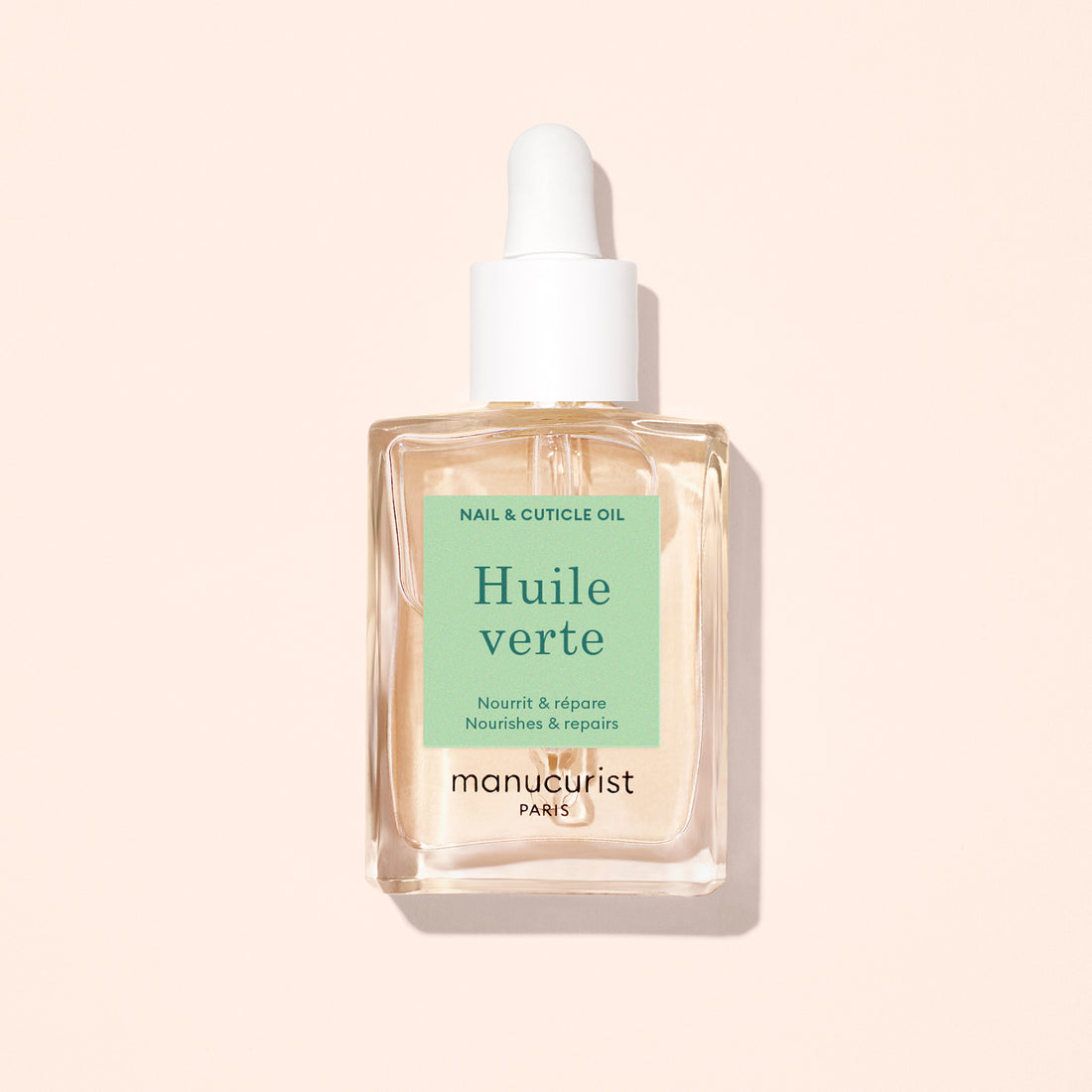
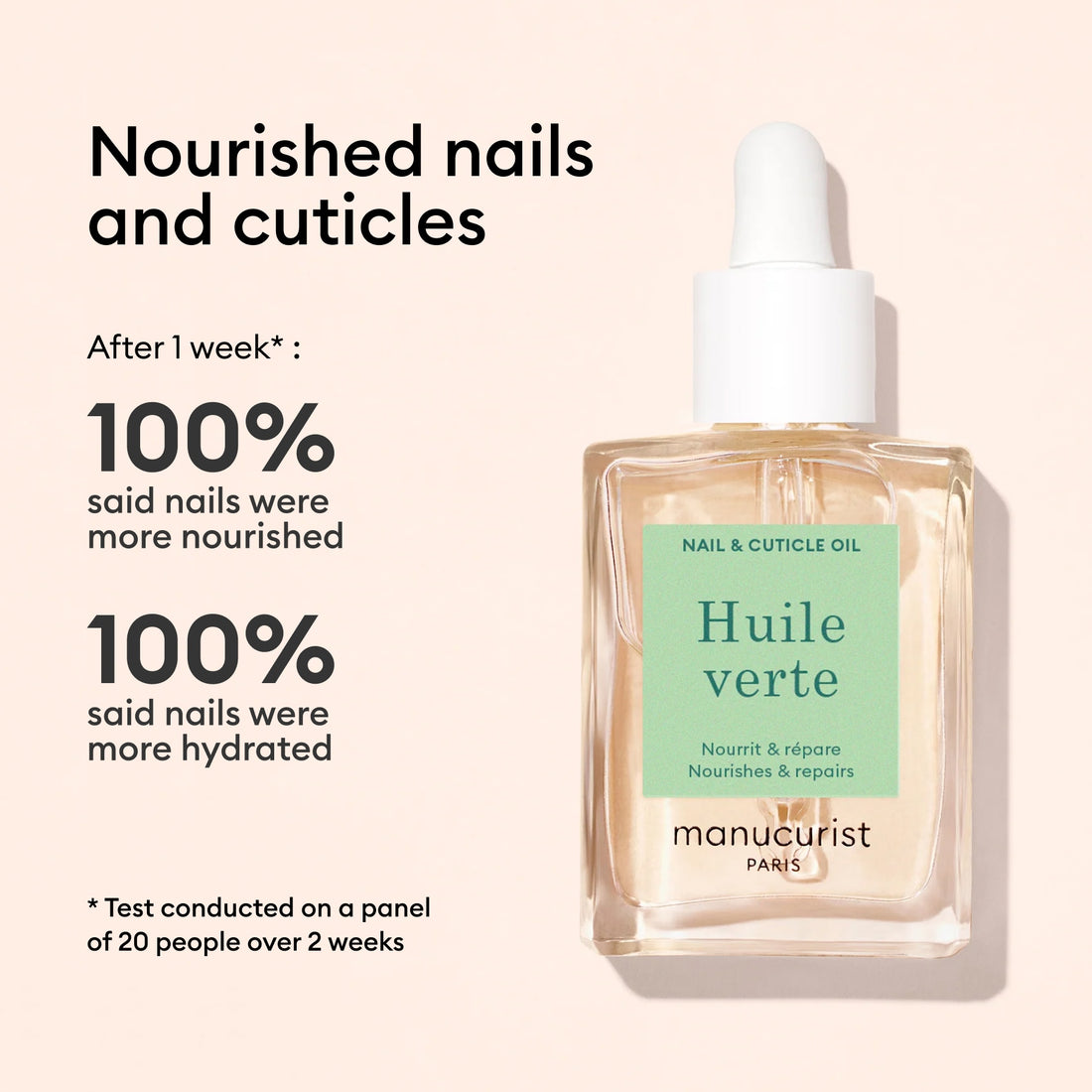
Apply the S.O.S. Base every two days on bare, clean nails, and massage in the Green Oil twice a day.
WEEK 2 - STRENGTHEN
Switch to the Keratin Booster three times a day, continuing the Green Oil twice daily.

If nails go straight from one gel manicure into the next without any repair step in between, the underlying weakness never really goes away. It just gets covered up again, layer after layer, until it becomes visible the moment the polish comes off.

Choosing a removal process that still relies on acetone soaking and filing keeps the same damaging cycle going, no matter which color or brand is used. The Green Flash range is designed to be removed at home in a different way, without acetone or filing, which removes two of the main causes of this kind of damage going forward.

Whether nails look strong or fragile has less to do with any one manicure and more to do with how consistently they are cared for in between. Nails that get regular repair and hydration hold up better over time than nails that only get attention when something already looks wrong.
Weak nails after a gel manicure are rarely caused by one bad appointment. They are usually the result of a cycle: acetone, filing, dehydration, repeated without a break. Understanding what is actually causing the damage is the first step toward breaking that cycle for good.





Green Flash™
the perfect alternative!

LED GEL POLISH
Green Flash™

Can be removed at home, without acetone and without rubbing

Dries immediately under an LED lamp

Ingredients: plant-based & vegan

Fortified nails with the patented Base Coat for 21 days long-lasting*
*With Xtrem Flash™ Top Coat

REGULAR GEL POLISH
Other brands
Removed in a salon with acetone, using a nail drill
Dries immediately under a UV lamp
Ingredients: potentially harmful and non-vegan
Lasts 3 weeks with risk of damaged nails

NAIL POLISH
Green™
Can be removed at home, without acetone, by rubbing
Air dries in afew minutes
Ingredients: plant-based & vegan

Fortified nails with the Base Coat for a 7 days long-lasting
Green™
the ultra-pigmented plant-based nail polish
NAIL POLISH
Green™
Can be removed at home, without acetone, by rubbing
Air dries in afew minutes
Ingredients: plant-based & vegan
Fortified nails with the Base Coat for a 7 days long-lasting
LED GEL POLISH
Green Flash™
Can be removed at home, without acetone and without rubbing
Dries immediately under an LED lamp
Ingredients: plant-based & vegan
Fortified nails with the patented Base Coat for 21 days long-lasting*
*With Xtrem Flash™ Top Coat
REGULAR GEL POLISH
Other brands
Removed in a salon with acetone, using a nail drill
Dries immediately under a UV lamp
Ingredients: potentially harmful and non-vegan
Lasts 3 weeks with risk of damaged nails
Active™ Smooth

Makeup Effect: CC Polish

Finish: Satiny
Coverage: Light


Active™ Smooth - 00
For a sheer rosy veil


Active™ Smooth - 01
For a sheer beige veil


Active™ Smooth - 02
For a golden finish


Active™ Smooth - 03
For a bronze finish
Active™ Glow
Makeup Effect: Gloss
Finish: Mirror shine
Coverage: Translucent


Active™ Glow Blueberry
For an intense pink gloss effect


Active™ Glow Raspberry
For a peachy pink gloss effect


Active™ Glow Cranberry
For a coral gloss effect


Active™ Glow Grape
For a lilac gloss effect
Active™ Plump, Shine, Blur & Bright
Finish : Pearly
Coverage : Semi-opaque


Active™ Plump Pink
For a plumping effect and a baby pink tint


Active™ Plump Aqua Glazed
For a plumping effect and a pearly milky tint with ocean-inspired shimmer


Active™ Shine Opal
For a highlighter effect and a sheer beige veil


Active™ Shine Icy
For a frosted effect and an iridescent shade


Active™ Bright
For a brightening effect and a soft white veil


Active™ Blur
For a blurring care polish with a velvety matte pink finish